Tired of sprinklers spraying your sidewalk? Learn how to convert bed-zone spray heads to drip irrigation in under an hour — no digging, no new pipes needed.
⏱ 8 min read · Last updated October 2026
Ken Kwiatkowski
Founder of GRASSHOLE Corporation & inventor of the Sprinkler-Guard
Veteran. Florida homeowner who got tired of replacing the same broken sprinkler heads every season. Featured by Kevin Harrington (from Shark Tank). Recipient of the JMI 30 Award. Manufactures in Bradenton, Florida.
Full disclosure: GRASSHOLE Corporation manufactures the Sprinkler-Guard discussed in this guide. Our recommendations come from years of field testing and customer feedback.
Table of Contents
You can convert a standard spray sprinkler head to drip irrigation without digging or calling anyone out. Unscrew the spray head from the riser, thread on a pressure regulator and inline filter, then attach a drip distribution head with emitter lines. Each zone conversion takes under an hour, and it stops water from hitting your house, sidewalk, and driveway permanently.
My neighbor spent years wondering why the soil next to his foundation was always damp. Turns out he had a cluster of spray heads in a narrow planting bed, and every morning cycle was soaking his siding. He converted those bed-zone heads to drip last August and hasn’t touched them since.
The EPA WaterSense program estimates that about 30% of all residential water use goes to outdoor irrigation, and up to 50% of that water is wasted from overspray, runoff, and inefficient delivery. Bed zones and narrow strips are often the biggest culprits.
Why Your Bed Zones Shouldn’t Have Spray Heads
Spray heads were designed for open turf. Put them in a planting bed, a foundation strip, or a narrow side yard, and the geometry works against you in two main ways.
The Overspray Problem
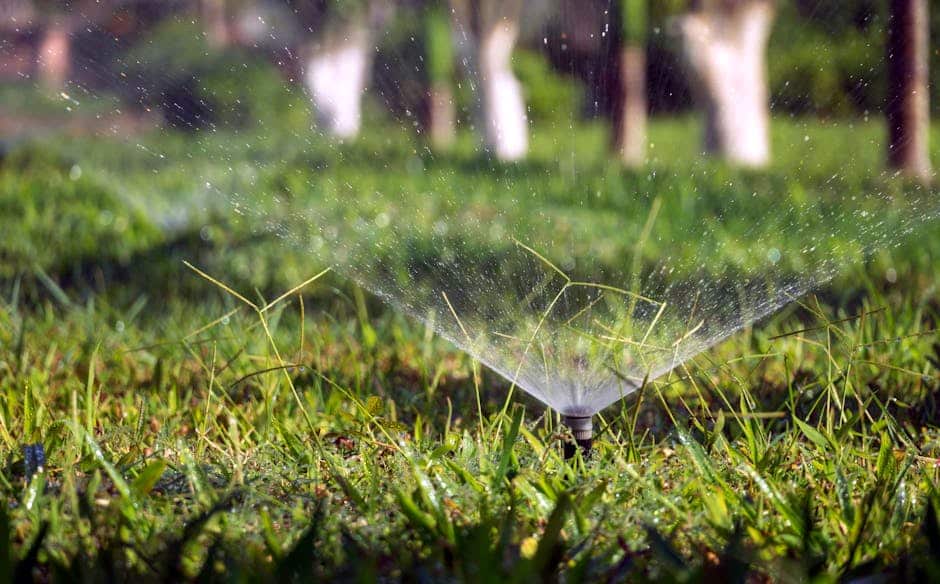
A typical spray head throws water in a fixed fan pattern. If that pattern extends past the edge of your bed, you’re watering the sidewalk, the driveway, or the base of your house. According to EPA WaterSense, a single misaligned or inefficient sprinkler head can waste up to 25,000 gallons of water per year — water that soaks your foundation instead of reaching your plants.
The Foundation Moisture Problem
Repeatedly wetting a house foundation through irrigation encourages mold, attracts pests, and softens the soil around footings. Even painted siding isn’t built for daily irrigation contact. Routing water directly to roots — which is exactly what drip does — eliminates the problem completely.
What You Need for a Drip Conversion
You don’t need new pipe or a new valve. Everything attaches to the riser the existing spray head was sitting on.
| Component | Purpose | Required? | Notes |
|---|---|---|---|
| Pressure regulator | Drops zone pressure to drip-compatible level | Yes | Running drip at full spray pressure destroys emitters fast |
| Inline filter | Keeps debris out of emitters | Yes | Critical in sandy or hard-water areas like Florida |
| Distribution head / manifold | Splits flow to multiple emitter lines | Yes | Comes with several barb outlets |
| Quarter-inch drip tubing | Routes water from manifold to each plant | Yes | Flexible, easy to cut to length |
| Drip emitters | Delivers water slowly at each root zone | Yes | Match the flow rate to the size of the plant |
Drip conversion kits at any irrigation supply store or home center bundle all five components in a single package sized to thread directly onto a standard half-inch riser. You don’t need to buy them separately.
| Situation | Year 1 Impact | Long-Term Exposure |
|---|---|---|
| Spray heads in bed zones (no change) | Up to 25,000 gal wasted per head per year* | Ongoing foundation moisture, sidewalk runoff, mold risk |
| Convert bed heads to drip | Near zero overspray — emitters target root zones only | Low — drip fittings are low-profile and out of the mower’s path |
| Lawn heads left unprotected (separate issue) | Minimal overspray from turf zones | $130-$360 per service call* when mower clips a head |
*Per EPA WaterSense and LawnLove
How to Install Drip Irrigation on an Existing Sprinkler Head
Total time needed: about 12 minutes.
- Step 1: Shut Off the Zone and Remove the Spray Head
Shut off the zone at the controller or at the valve box. Unscrew the spray head from the riser — it turns counterclockwise and comes right off. Set it aside in case you ever want to reverse the conversion.
- Step 2: Thread the Pressure Regulator Onto the Riser
Screw the pressure regulator directly onto the riser. Hand-tight plus a quarter turn is enough — don't wrench it. The regulator is not optional. Standard residential spray zones run at pressure levels far higher than drip emitters are built for, and according to EPA WaterSense, many systems operate at excess pressure that turns water into a fine mist before it reaches the ground. The regulator drops your zone to the level drip components actually need.
- Step 3: Add the Inline Filter
Thread the filter onto the outlet side of the regulator. It catches sand, sediment, and mineral deposits before they clog your emitters. If you're in Florida, Texas, or another sandy Sun Belt state, this filter matters more than you'd think.
- Step 4: Attach the Distribution Head
The distribution head (sometimes called a drip manifold) screws onto the filter and gives you several barb outlets, each sized for quarter-inch tubing. This is where your emitter runs branch out to individual plants.
- Step 5: Run Tubing and Set Emitters
Push quarter-inch tubing onto each barb outlet and route it along the bed to each plant. Punch a drip emitter into the tubing end at each root zone. Pin the tubing down with U-stakes so it stays put through wind and watering cycles. Match the emitter's rated flow to plant size — smaller flow for annuals and groundcovers, higher flow for established shrubs. The kit packaging walks you through the sizing.
- Step 6: Set a Separate Schedule for the Drip Zone
Drip zones need much longer run times than spray zones to deliver the same amount of water — and the wrong schedule is the most common reason converted zones under-water plants. Set the converted zone on its own program in the controller rather than keeping it on the shared spray schedule. For timing guidance by zone type and season, see our guide on the best time to water your lawn.
Conversion Mistakes That Trip People Up
Skipping the pressure regulator. The most common reason DIY drip fails. Without it, you’re running drip fittings at spray-zone pressure — they won’t survive long.
Overloading the distribution head. Each manifold has a rated output. Add too many emitter lines and pressure drops at each one, under-watering everything on the zone.
Leaving the drip zone on the spray schedule. Drip moves water more slowly. If you don’t extend the run time, plants on the converted zone won’t get enough water. Long and slow is the right rhythm.
Converting lawn heads by mistake. Drip is for beds, borders, and narrow strips. Lawn zones stay on spray — they cover large turf areas where that pattern makes sense. If you have lawn heads that keep sinking instead, that’s a different problem we cover in our guide on why sprinkler heads keep sinking.
Your Lawn Heads Still Need Protection
Once you’ve handled the bed zones, every spray head remaining in your lawn is still in the path of every mowing pass. A pop-up head in open turf has no defense against a mower wheel or trimmer string — and replacing one costs $130-$360 with a service call.
The Sprinkler-Guard by GRASSHOLE sits around each lawn head. The patented ring, made from Flexible Advance ABS with UV Deterrent, absorbs mower and trimmer impact instead of transferring it straight to the head. It also keeps grass from growing over and around the sprinkler. Press it in around the head in 30 seconds, no tools needed.
The 20-pack at Sprinkler-Guard.com comes out to $6.25 per head — less than a fraction of one service call — and covers most yards in a single afternoon.
Protect your lawn heads at Sprinkler-Guard.com →
Frequently Asked Questions
Yes, but it takes one extra step. A pop-up body has a spring-loaded stem inside the casing. The whole casing unscrews counterclockwise from the supply pipe underground — use a wrench and expect to do a little digging. Replace it with a plain half-inch male threaded riser at the same height, then follow the conversion steps above. It adds time to the project but it's still well within DIY range.
No new valve needed. Your existing valve handles the drip zone fine. The pressure regulator at the head drops pressure before water reaches the emitters — the valve itself doesn't need to change. What does change is your controller program: drip zones need much longer run times than spray zones, so set the converted zone on its own schedule.
Enough to notice on your water bill. EPA WaterSense estimates up to 50% of outdoor irrigation water is wasted from overspray and runoff. Converting bed zones to drip eliminates nearly all of that waste for those specific heads. The GreenSpaces Coalition reports 20-30% reductions in total outdoor water use from targeted upgrades like this.
It works better in sandy soil than spray does. Sandy soil drains fast, which means spray runoff disappears before roots can absorb it. Drip delivers water slowly at the root zone — exactly the right pace for sandy soil to pull in. If you're in Florida, along the Gulf Coast, or anywhere in the Sun Belt with sandy beds, converting bed zones to drip is one of the best irrigation upgrades you can make.
A simple rule: beds and borders get drip, lawns get spray. Any head that's pointing at a planting bed, a foundation strip, a narrow side yard, or anywhere near the house wall is a drip conversion candidate. Heads sitting in the middle of open turf — where the pattern lands on grass in every direction — stay as spray.
That's the problem drip solves permanently. If a spray head in a narrow strip consistently throws water onto the sidewalk or driveway no matter how you adjust it, the issue is the geometry of a spray head in a confined zone. Converting to drip eliminates the problem at the source. For lawn heads edging near a sidewalk, see our guide on protecting sprinkler heads from lawn mowers for more on keeping those heads intact.
Run each zone for about 30 seconds and watch where the heads pop up. Flag them while the system is running. If some are buried under overgrown grass, check our guide on how to find hidden sprinkler heads before you start the conversion.
It’s a One-Afternoon Fix with Years of Payoff
Converting bed-zone spray heads to drip takes under an hour per zone — no new pipes, no excavation, just a riser swap that puts water exactly where your plants need it. The foundation stays dry, the sidewalk stays dry, and your water bill reflects the difference.
Your lawn heads stay as spray and still need protection from every mowing pass. A Sprinkler-Guard around each one handles that part. Do both in the same afternoon and you’ve removed two of the most common causes of wasted water and broken irrigation in a single session.
For more on what causes sprinkler heads to break in the first place, see our guide on why sprinkler heads keep breaking.
Not sure? The Sprinkler-Guard ships in 10/20/30/60-packs. If one ever takes too much abuse, you swap just that one in 30 seconds — no full system to replace.
Shop Sprinkler-Guard
- Starting at $64.99 for a 10-pack
- Free shipping on orders over $100
- 500+ five-star ratings from homeowners on Amazon
- Made in the USA by a Veteran-Owned Business in Bradenton, Florida
- Patented design — featured by Kevin Harrington (from Shark Tank)
- No tools required — installs in 30 seconds per head
- One-by-one swap design — if a guard takes too much abuse, swap just that one
Last updated: October 2026. Statistics sourced from EPA WaterSense, Johns Hopkins Medicine, LawnStarter, LawnLove, HomeGuide, IBISWorld. Product specifications and pricing current as of publication date.