Hunter PGP adjustment guide: set arc and radius with the key, swap nozzles, understand PGP vs PGP Ultra, and stop mowers from clipping your rotors.
⏱ 10 min read · Last updated October 2026
Ken Kwiatkowski
Founder of GRASSHOLE Corporation & inventor of the Sprinkler-Guard
Veteran. Florida homeowner who got tired of replacing the same broken sprinkler heads every season. Featured by Kevin Harrington (from Shark Tank). Recipient of the JMI 30 Award. Manufactures in Bradenton, Florida.
Full disclosure: GRASSHOLE Corporation manufactures the Sprinkler-Guard discussed in this guide. Our recommendations come from years of field testing and customer feedback.
Table of Contents
The Hunter PGP is one of the most common gear-driven rotors in residential irrigation. It adjusts arc and radius with a simple key, swaps nozzles without tools, and sits flush with the ground — which is exactly why mowers keep clipping it. Here’s how to set it up right and keep it in one piece.
If you’ve got a sprinkler head that slowly rotates back and forth across a wide arc of lawn instead of spraying a fixed fan pattern, you’ve got a rotor. And if your system was installed sometime in the last 20 years, there’s a decent chance that rotor is a Hunter PGP.
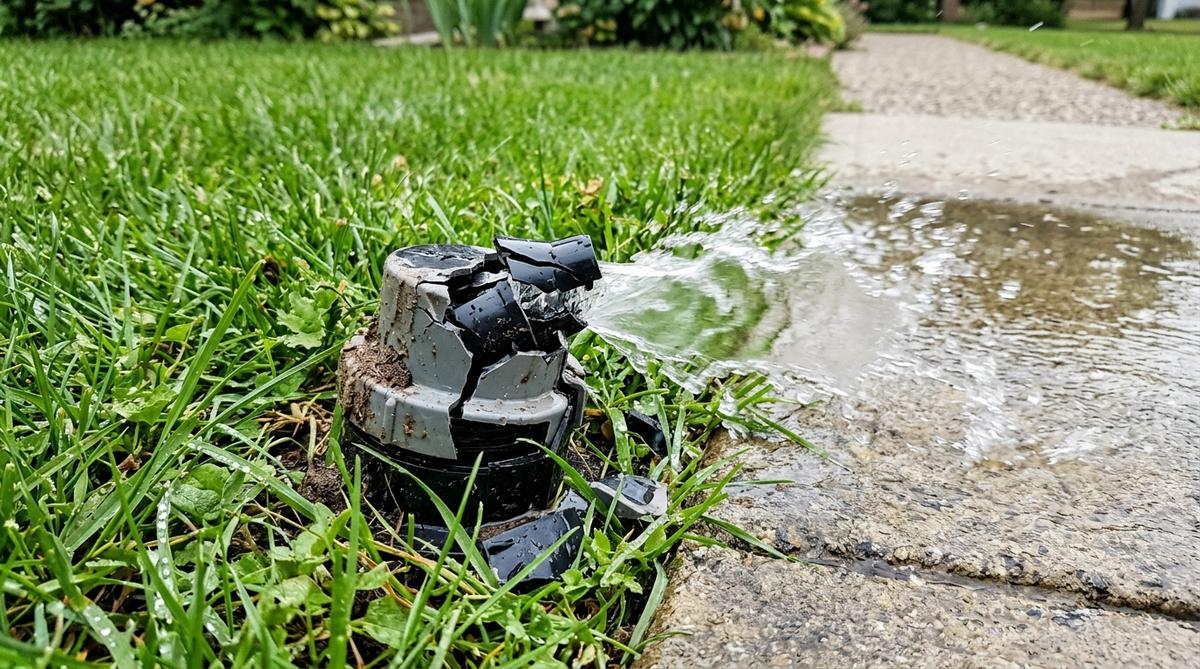
The PGP is everywhere. Installers reach for it because it’s reliable, durable, and simple to adjust in the field. Homeowners learn about it the hard way — usually after the mower clips one and water starts spraying sideways across the driveway. According to LawnLove, professional replacement of a single sprinkler head runs $59 to $150 before the service call even starts. Multiply that across a zone’s worth of rotors and you’re looking at a real number.
Here’s what you need to know: how the PGP works, how to adjust it properly, and how to stop the replacement cycle.
What Makes the Hunter PGP Different from Fixed Spray Heads
Most homeowners don’t think much about which sprinkler heads they have until one breaks. But there’s a real difference between the small pop-up spray heads and a gear-driven rotor like the PGP, and that difference affects how you adjust them, how you protect them, and what goes wrong.
Fixed spray heads pop up and emit a fan-shaped spray pattern in a fixed direction. They’re common in flower beds, narrow strips, and zones where you need precise short-range coverage.
The Hunter PGP is a gear-driven rotor. It pops up and slowly sweeps back and forth across a wide arc of lawn, driven by a gear mechanism inside the body. The coverage radius is much broader than a fixed spray head. You’ll find PGPs on the main turf zones — the open lawn areas where wide, even coverage matters.
Hunter designed the PGP to sit low and flush with the ground. That design is intentional: a head that sits level with the turf is less likely to catch a mower deck on the way past. The problem is that grass doesn’t care about the design intent. It grows over anyway, hides the cap, and then the mower finds the head at soil level.
Why Hunter PGP Heads Keep Getting Clipped
You installed it correctly. It’s level with the lawn. The mower is still hitting it. Here’s what’s actually happening:
Grass creeps over the cap. The PGP sits low by design, but Bermuda and St. Augustine lay down dense mats of growth that cover everything. After two weeks of summer growth, the head disappears into the lawn. The mower deck clips whatever is at that level.
The collar gradually rises. Soil settlement, tree root pressure, and heavy foot traffic can lift the body slightly over time. A small amount of rise is enough to go from level to exposed. According to Texas Rainmakers, lawn mowers are the leading cause of broken and cracked sprinkler heads — and most of those hits happen to heads that were installed correctly.
Arc drift accumulates. The PGP uses a rubber stop to hold its arc setting. Repeated mower strikes, foot traffic, and heavy equipment passing over the zone slowly shift the stop position. The head starts watering the sidewalk. You adjust it. Same problem two weeks later.
The nozzle gets fouled. Dirt and debris that gets knocked into the cap during a strike or from soil disturbance can clog the nozzle, reducing throw distance and coverage pattern without any visible damage to the body.
The cycle looks like this: adjust, mow, hit, adjust again, eventually replace. If you’re replacing rotors every season, the problem isn’t bad luck. It’s a mechanical problem with a mechanical fix.
If you’re resetting the same rotor head more than twice a season, the arc isn’t the problem — what’s hitting the head and knocking it back is. No amount of adjustment fixes repeated impact.
How to Fix Hunter PGP Arc and Radius Problems
Total time needed: about 6 minutes.
- Step 1: Set the fixed leg of the arc
Rotate the rotor cap slowly by hand until you feel it reach one of the two hard stops. That's the start position for the arc. Pick a reference point — a sidewalk edge, a fence line, a specific plant — and align the head so that stop corresponds to where you want the rotor to begin its sweep. This fixed leg of the arc is what the rotor always returns to.
- Step 2: Adjust the arc width with the key
The plastic key that came with the PGP (or any standard Hunter key from the hardware store) fits the slot on top of the cap. Insert the key and turn clockwise to narrow the arc, counterclockwise to widen it. The PGP adjusts continuously across a wide arc range, from a partial pattern to a full circle. Run the zone once to watch the sweep, then fine-tune from there.
- Step 3: Tune the radius with the screw or a nozzle swap
The radius screw is in the center of the cap next to the key slot. A small turn clockwise reduces throw distance; counterclockwise increases it. This is best for fine adjustments within a few feet. For bigger coverage changes, swap the nozzle. Hunter color-codes PGP nozzles by throw distance. They press in and pop out — no tools required, just a small flathead to pop the existing nozzle out.
PGP vs PGP Ultra — Which One Do You Have?
Both models share the same fundamental gear-drive mechanism, the same nozzle system, and the same adjustment key. The differences are smaller than the product names suggest.
| Feature | Hunter PGP | Hunter PGP Ultra | Fixed Spray Head |
|---|---|---|---|
| Head type | Gear-driven rotor | Gear-driven rotor | Fixed pop-up spray |
| Arc adjustment | Partial to full circle | Partial to full circle | Fixed pattern only |
| Radius adjustment | Screw + nozzle swap | Screw + nozzle swap | Nozzle-dependent |
| Stall protection | Standard | Enhanced (keeps rotating under low pressure) | N/A |
| Body footprint | Standard | Standard | Smaller |
The Ultra’s enhanced stall protection matters in zones where multiple rotors run simultaneously and pressure can drop mid-cycle. In a typical residential yard with normal pressure, either version performs the same way in daily operation. If you’re not sure which one you have, check the text molded into the rotor body — it’s printed there.
The PGP-00 is a fixed-arc version (no adjustment key needed), sometimes installed in tight corners where the arc never needs to change. You won’t mistake it for the adjustable versions once you look at the top.
How to Protect a Hunter PGP from Mower Damage
Adjusting a PGP correctly is maintenance. Protecting it from the mower is a permanent fix.
The Sprinkler-Guard by GRASSHOLE sits flat in the soil around the rotor body, at the same level as the head itself. The ring of Flexible Advance ABS with UV Deterrent absorbs the impact from a mower deck or trimmer string instead of passing that force directly to the rotor cap. The head pops up through the center opening on its normal cycle without any interference.
On sizing: measure your PGP body at its widest point — the main housing, not the rotating cap on top — before ordering. The original 3-inch Sprinkler-Guard fits pop-up spray heads and rotor bodies up to 3 inches wide. Most standard Hunter PGP rotor bodies are narrower than 3 inches and fit the original guard. If you have a larger commercial rotor or a wide-body head in your system, the 5-inch Sprinkler-Guard is designed for that application. Measure first.
Installation takes about 30 seconds per head. Press the ring into the soil around the body with the rotor in the retracted position. The guard sits flush with the lawn surface — same principle as the rotor itself.
| Outcome | 1 year | 5 years |
|---|---|---|
| Pro service call per broken rotor | $59-$150 per head* | $295-$750 per head* |
| DIY part replacement per head | $3-$30 per head* | $15-$150 per head* |
| Sprinkler-Guard per head | $6.50 one-time | $6.50 total |
The guard also solves the secondary problem: it keeps grass and weeds from creeping over the rotor body. That’s the real vulnerability with flush-mounted rotors. Grass covers the cap, the mower can’t see it, the cap gets clipped. Keep the area around the body clear and the head stays visible.
If you want to compare the Sprinkler-Guard against other protection methods, our comparison of sprinkler head protectors covers concrete donuts, plastic guards, and DIY alternatives side by side. And if you’re dealing with heads that keep sinking after installation, this post on sprinkler heads sinking addresses that specific problem.
Have a mix of Rain Bird 5000 rotors in your system? The Rain Bird 5000 post covers the same adjustment and protection process for that model.
Shop Sprinkler-Guard at Sprinkler-Guard.com
Frequently Asked Questions
The Hunter PGP adjustment key is a small plastic tool that fits the slot on the top of the rotor cap. Turning it clockwise narrows the arc; counterclockwise widens it. Generic Hunter keys fit the PGP and are available at most irrigation supply houses and hardware stores. The key that ships with the head works on any Hunter gear-driven rotor that uses this adjustment system.
Usually because something is physically hitting the head. Mower strikes and heavy foot traffic can bump the stop position out of place. If you're resetting the same head repeatedly through a season, the issue is mechanical impact, not adjustment error. Protecting the head from repeated hits is the only fix that actually holds.
The PGP Ultra adds enhanced stall protection. The mechanism keeps the rotor turning even when zone water pressure drops during operation — useful in zones with several rotors running simultaneously. Both models use the same nozzle system and adjustment key. For most residential applications with normal water pressure, either version works the same way in daily use.
Measure the PGP body at its widest point first. The original 3-inch Sprinkler-Guard fits heads with bodies up to 3 inches wide. Most standard Hunter PGP rotor bodies are narrower than that. The 5-inch Sprinkler-Guard is designed for larger-body rotors and wide pop-up heads. When in doubt, measure before you order.
Yes — significantly. A single broken or misaligned sprinkler head can waste up to 25,000 gallons of water per year, according to the EPA WaterSense program. A damaged rotor running water sideways, into the street, or against the foundation is one of the fastest ways to spike a water bill without noticing the problem until the statement arrives.
Pop out the existing nozzle with a small flathead screwdriver, then press in the replacement. Hunter color-codes PGP nozzles by throw distance. A full set covers the complete range of the PGP and is available at irrigation supply houses and online. No other tools required. If debris got into the nozzle port during a strike, clear it out with a toothpick before installing the new nozzle.
A sprinkler head guard around each rotor body is the most direct fix. The guard absorbs mower and trimmer impact, keeps grass from creeping over the cap, and keeps the head visible at soil level without interfering with normal operation. For rotor heads like the Hunter PGP, confirm that the guard fits the body diameter — not every product at the hardware store is designed for rotors. See our full guide at how to protect sprinkler heads from lawn mowers.
The Bottom Line
The Hunter PGP is a solid, reliable rotor. If yours keep going out of adjustment or getting damaged, the adjustment process isn’t the problem — what’s hitting the heads is. Arc drift, cap damage, and nozzle fouling all trace back to repeated impacts from mowing and trimming that the flush-fit design can’t stop on its own.
Adjust the arc and radius with the key, match the nozzle to your zone’s coverage needs, and install a Sprinkler-Guard around each rotor body to absorb what the mower deck throws at it. That’s the full maintenance loop for these heads.
Pick up a pack at Sprinkler-Guard.com and stop replacing heads that shouldn’t need replacing.
Not sure? The Sprinkler-Guard ships in 10/20/30/60-packs. If one ever takes too much abuse, you swap just that one in 30 seconds — no full system to replace.
Shop Sprinkler-Guard
- Starting at $64.99 for a 10-pack
- Free shipping on orders over $100
- 500+ five-star ratings from homeowners on Amazon
- Made in the USA by a Veteran-Owned Business in Bradenton, Florida
- Patented design — featured by Kevin Harrington (from Shark Tank)
- No tools required — installs in 30 seconds per head
- One-by-one swap design — if a guard takes too much abuse, swap just that one
Last updated: October 2026. Statistics sourced from EPA WaterSense, Johns Hopkins Medicine, LawnStarter, LawnLove, HomeGuide, IBISWorld. Product specifications and pricing current as of publication date.