Orbit sprinkler heads fail the same ways as every brand: mower strikes, clogs, cracked caps. Here’s the five-problem guide and the fix that stops the pattern.
⏱ 9 min read · Last updated October 2026
Ken Kwiatkowski
Founder of GRASSHOLE Corporation & inventor of the Sprinkler-Guard
Veteran. Florida homeowner who got tired of replacing the same broken sprinkler heads every season. Featured by Kevin Harrington (from Shark Tank). Recipient of the JMI 30 Award. Manufactures in Bradenton, Florida.
Full disclosure: GRASSHOLE Corporation manufactures the Sprinkler-Guard discussed in this guide. Our recommendations come from years of field testing and customer feedback.
Table of Contents
Orbit pop-up spray heads are a solid, affordable choice for residential irrigation — but they run into the same problems every brand does: mower and trimmer strikes, clogged nozzles, sinking caps, and grass creeping over the top. This guide covers the five most common Orbit sprinkler head problems and how to fix each one before it turns into a service call.
If you’ve replaced a sprinkler head in the last few years, you’re in good company. According to LawnLove and HomeGuide, professional sprinkler head replacement runs $59 to $150 per head, and sprinkler head damage is the most common irrigation repair homeowners face. Orbit heads are no exception. The brand makes good products, but every pop-up spray head has its limits when a mower deck is swinging above it twice a week.
The good news: most Orbit head problems are diagnosable in about five minutes and fixable the same afternoon.
Why Orbit Sprinkler Heads Break Down Over Time
Orbit spray heads are pop-up style, meaning the body sits flush with the soil and the stem rises when the zone runs. That design puts them right in the path of three things that wear them out faster than normal aging.
Lawn Mower Impact
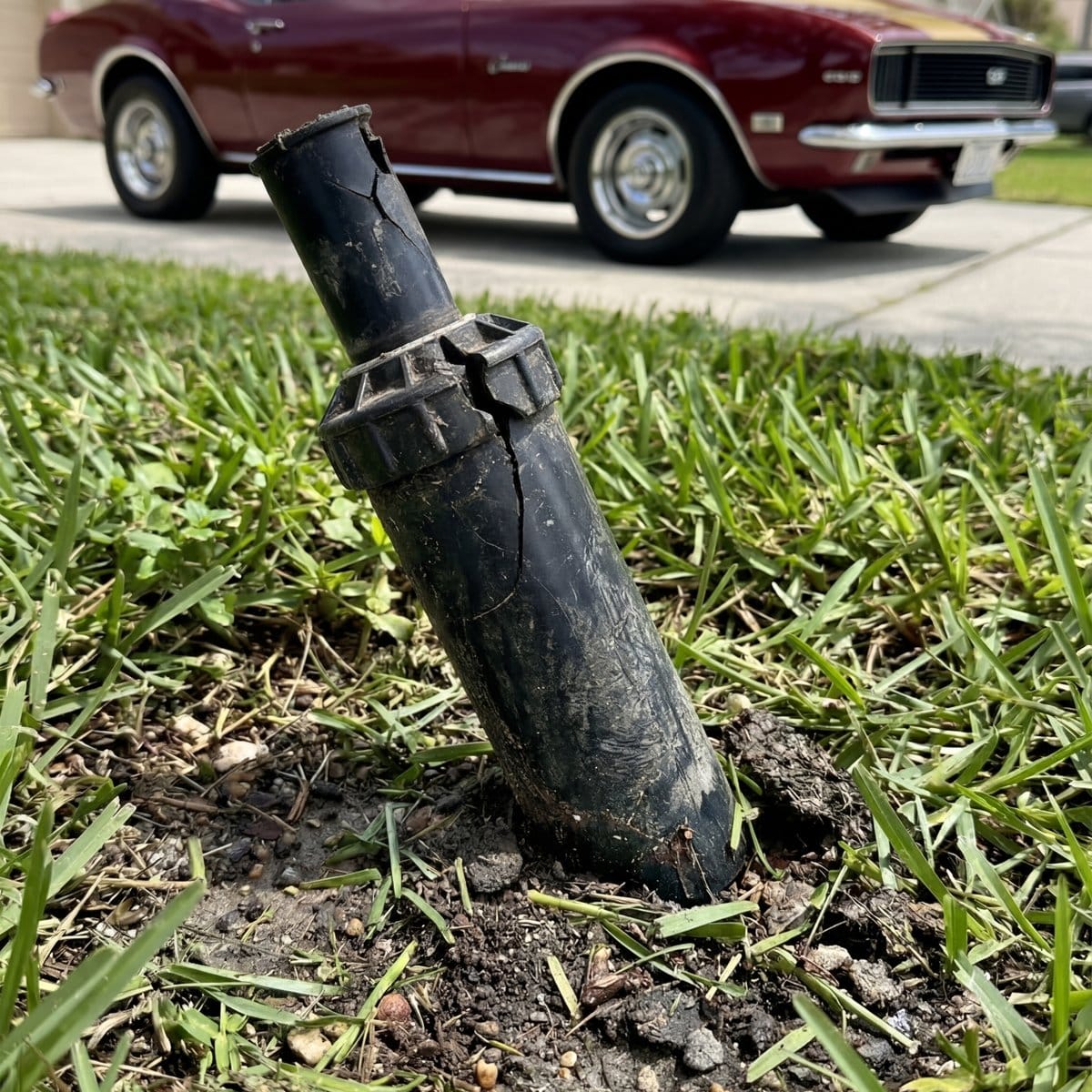
A mower wheel rolling over a slightly elevated head pushes it sideways. A mower blade clipping the nozzle cap can shatter it on contact. It takes one pass too close to crack the cap, twist the riser, or knock the whole body out of alignment. According to data from Texas Rainmakers and Westside Grounds, lawn mowers are the number one cause of broken and cracked sprinkler heads in residential yards.
String Trimmer Strikes
Your trimmer is working at exactly the right height to clip the nozzle cap of a flush-mounted spray head. Even a glancing hit can crack the nozzle housing, knock the adjustment screw off-axis, or break the filter screen inside the head. Trimmer damage tends to show up as an erratic spray pattern long before the head actually breaks off.
Soil Settlement and Sinking
Pop-up heads installed in sandy or soft soil slowly sink over time. Once the cap drops below grade, grass grows over it and mower wheels start rolling directly across the top. You stop noticing the head is there. The mower doesn’t miss it. That’s when the real damage happens.
5 Common Orbit Sprinkler Head Problems
Knowing which problem you’re dealing with tells you whether you need a $3 fix or a full replacement.
1. Clogged Nozzle (Low Pressure or Uneven Spray)
A nozzle that sprays in a ragged arc or throws water unevenly is usually a debris issue. Orbit nozzles have a small filter screen inside the body that traps sediment over time. Florida and other Sun Belt regions with hard water build up mineral deposits inside the nozzle that restrict flow. The cap pops up but the water barely makes it past the arc you’d expect.
2. Head Won’t Retract After Watering
If the stem stays up after the zone shuts off, debris is jamming the retract spring, or the spring itself has worn out. Grass can also creep into the opening and physically block the cap from dropping. A sticky head is annoying because it sits up and becomes a mower target every time you cut.
3. Cracked or Shattered Cap
This one is usually obvious. The top of the head is visibly broken, cracked, or chipped. Water jets sideways instead of in the intended arc. Per the EPA WaterSense program, a single broken head can waste up to 25,000 gallons of water per year. One cracked Orbit cap is not a small problem.
4. Leaking at the Base
A slow seep around the base of the head when the zone isn’t running usually means the valve at that zone isn’t fully seating, but the problem can also be a cracked housing or a failed wiper seal inside the pop-up body. The wiper seal is what keeps water from leaking out around the stem while the system runs.
5. Grass Growing Over the Head
This is more of a slow-developing problem than an acute failure, but it sets up every other problem on this list. Once St. Augustine or Bermuda grass creeps over the cap opening, the head has to push through turf to pop up. That adds back-pressure that stresses the spring, gums up the nozzle opening, and makes the head invisible to anyone mowing. A head covered in grass is a head waiting to get clipped.
| Problem | Quick Fix | Lasting Fix | Typical DIY Cost |
|---|---|---|---|
| Clogged nozzle | Remove and rinse filter | Replace nozzle insert | $3-$30 |
| Won’t retract | Clear grass and debris | Lubricate or replace body | $3-$30 |
| Cracked cap | Tape as temporary patch | Replace head entirely | $3-$30 |
| Mower strike damage | Replace broken head | Add a sprinkler guard | $3-$30 parts |
| Grass overgrowth | Trim back manually | Install a grass-inhibiting guard | Free to $6.50/head |
How to Fix Common Orbit Sprinkler Head Issues
Total time needed: about 8 minutes.
- Step 1: Diagnose Before You Replace
Run the zone for two minutes and watch the head. Note whether it pops up fully, where water goes, whether it retracts, and whether there's any seeping at the base. A lot of homeowners replace heads that just need a nozzle clean. A lot of other homeowners clean nozzles that actually need replacement. A two-minute observation usually tells you which is which.
- Step 2: Clean a Clogged Orbit Nozzle
Turn off the zone. Unscrew the nozzle cap from the stem (usually hand-tight). Pull out the nozzle insert and rinse it under running water. Use a small pick or compressed air to clear the filter screen. Reinstall and run the zone. If the spray pattern normalizes, you're done. If it still looks off, swap in a replacement nozzle (Orbit sells them separately, usually $3 to $5 each).
- Step 3: Clear a Head That Won't Retract
With the zone off and the stem extended, feel around the base of the stem where it meets the body. Grass, roots, and sediment often pack into that gap. Clear it out with your fingers or a small screwdriver. Run the zone briefly, then shut it off and watch whether the stem retracts. If it still stays up, the spring inside the body has worn out and the head needs replacement.
- Step 4: Replace a Cracked or Broken Orbit Head
Turn off the zone at the controller. Dig a small circle around the head to expose the inlet thread. Unscrew the old head (turn counterclockwise). Flush the line for a few seconds to clear any debris from the pipe. Thread the new head in hand-tight, then a quarter-turn with pliers (over-tightening can crack the new cap). Set your arc and radius before you backfill. The math isn't complicated. A 20-pack of Sprinkler-Guard covers most mid-size yards and costs less than a single pro service visit.
The Fix Most Homeowners Skip (And Why It Keeps Costing Them)
Cleaning a nozzle and swapping a cracked head are solid one-time fixes. But if you’re not doing anything to change what caused the damage in the first place, you’ll be back here next season doing it again.
The GreenSpaces Coalition estimates that routine maintenance and protection can cut outdoor water waste by 20 to 30 percent while dramatically reducing repair frequency. The most reliable way to stop the mower and trimmer damage cycle is to put something between the head and the equipment.
The Sprinkler-Guard by GRASSHOLE is a patented ring made from Flexible Advance ABS with UV Deterrent that drops over any pop-up spray head and sits flush with the lawn. It fits heads up to 3 inches across, which covers most residential Orbit spray heads. The mower blade deflects off the ring instead of catching the nozzle cap. The trimmer line bounces away. And the ring inhibits grass from growing back over the head opening, which prevents the slow-creep problem from starting again.
Install time is about 30 seconds per head. No tools needed.
After replacing my fourth Orbit head in three years, I finally put a guard on every one of them. Haven’t touched a single head since. My irrigation guy actually asked me what I did differently when he came out for the annual inspection.
Shop Sprinkler-Guard 20-Pack ($125)
If you want a full breakdown of protection options, the best sprinkler head protectors guide compares guards, concrete donuts, and swing joints side by side. For a deeper look at why concrete rings fail, see concrete donuts vs Sprinkler-Guard. And if your heads are sinking below grade, sprinkler heads keep sinking has a specific fix for that.
For the full rundown on keeping mowers away from your heads, how to protect sprinkler heads from lawn mowers is the place to start.
Frequently Asked Questions
**Yes** — the Sprinkler-Guard fits any pop-up spray head up to 3 inches wide. Most standard residential Orbit spray heads fall well within that range. Slide the guard down around the head until the flange sits flush with the soil surface. No tools, no hardware, no modification to the head itself.
**The most common cause is mower or trimmer contact.** If you're replacing the same head repeatedly, it's almost always because the mower is clipping it or trimmer line is cracking the nozzle. A sprinkler guard around the head absorbs those impacts and deflects the blade or line away from the cap.
**Unscrew the cap while the zone is off, pull the nozzle insert, and rinse the filter screen under running water.** A small pick or compressed air clears stubborn debris. Most clogged Orbit nozzles clean up in two minutes and spray normally once reinstalled. If the pattern is still irregular after cleaning, swap the nozzle insert rather than the whole head.
**According to [HomeGuide](https://homeguide.com/costs/sprinkler-head-replacement-cost)**, most quality sprinkler heads last 10 to 15 years under normal conditions. Heads that get struck by mowers or trimmers typically last much less. Adding a guard to each head after installation is the single most practical step for extending that window.
**Yes.** Orbit nozzles are sold separately and are interchangeable across most of their spray head bodies. If the cap body is cracked, replace the whole head. If the cap is intact but the spray pattern is off, try the nozzle insert first before spending money on a full replacement.
**Install a sprinkler head guard around each head.** Concrete donuts are a common alternative but they sink, crack in freezing climates, and eventually let grass grow over them. A flexible ABS guard like the [Sprinkler-Guard by GRASSHOLE](https://sprinkler-guard.com) sits flush with the lawn and absorbs mower and trimmer impacts without sinking or shifting. Full comparison here: [best sprinkler head protectors](https://grassholesystem.com/best-sprinkler-head-protectors/).
**A seep around the base when the zone is off usually points to a valve not fully closing.** If water is seeping around the stem while the zone runs, the wiper seal inside the pop-up body has worn out. Replacement seals are available for most Orbit bodies, though swapping the full head is often easier and costs about the same.
**No.** The guard sits on the surface around the head. You can dig down and access the head, replace it, and reinstall without disturbing the guard. If the soil level shifts during the work, just press the guard back into place. The 30-second no-tools install applies to re-seating as well as first install.
The Bottom Line
Orbit sprinkler heads are solid performers, but they share the same Achilles’ heel as every other brand: they sit flush with your lawn and in the path of every mower pass and every trimmer sweep. Cleaning nozzles and swapping cracked caps gets you back up and running, but unless you break the damage cycle, you’ll be doing the same repairs next season.
Put a guard on each head after your next repair. It’s the one fix that changes the pattern instead of just responding to it.
Not sure? The Sprinkler-Guard ships in 10/20/30/60-packs. If one ever takes too much abuse, you swap just that one in 30 seconds — no full system to replace.
Shop Sprinkler-Guard
- Starting at $64.99 for a 10-pack
- Free shipping on orders over $100
- 500+ five-star ratings from homeowners on Amazon
- Made in the USA by a Veteran-Owned Business in Bradenton, Florida
- Patented design — featured by Kevin Harrington (from Shark Tank)
- No tools required — installs in 30 seconds per head
- One-by-one swap design — if a guard takes too much abuse, swap just that one
Last updated: October 2026. Statistics sourced from EPA WaterSense, Johns Hopkins Medicine, LawnStarter, LawnLove, HomeGuide, IBISWorld. Product specifications and pricing current as of publication date.