A pop-up sprinkler head has 7 parts: body, riser, cap, nozzle, filter screen, wiper seal, and spring. Learn which ones fail first and which you can swap without digging.
⏱ 9 min read · Last updated October 2026
Ken Kwiatkowski
Founder of GRASSHOLE Corporation & inventor of the Sprinkler-Guard
Veteran. Florida homeowner who got tired of replacing the same broken sprinkler heads every season. Featured by Kevin Harrington (from Shark Tank). Recipient of the JMI 30 Award. Manufactures in Bradenton, Florida.
Full disclosure: GRASSHOLE Corporation manufactures the Sprinkler-Guard discussed in this guide. Our recommendations come from years of field testing and customer feedback.
Table of Contents
A pop-up sprinkler head has seven main parts: the body, riser, cap, nozzle, filter screen, wiper seal, and spring. The cap and riser sit above ground and take the most abuse from mowers and trimmers. Most of the inner parts can be swapped out without digging — if you know which one actually failed.
You go out one morning to run your irrigation system and notice one zone is barely trickling. Or maybe you heard that familiar crunch and found the head spraying sideways instead of up. Before you call an irrigation technician, it helps to know what you’re actually looking at.
Professional sprinkler head replacement runs $59 to $150 per head, and most of that is the service call, not the part itself. Knowing which piece failed can save you a lot of money.
The Seven Parts of a Pop-Up Sprinkler Head
Most residential pop-up heads — the kind that retract into the ground when the zone turns off — share the same basic anatomy. Whether you’ve got Rain Bird, Hunter, or Orbit, they all work on the same principle.
The Body
The body is the outer housing that sits in the ground. It connects to the underground water line via a threaded fitting at the bottom and anchors everything else in place.
Bodies rarely fail on their own. When they do, it’s usually a crack from frozen ground (less of an issue in the Sun Belt) or a tree root shifting the pipe below.
The Riser
The riser is the inner tube that pops up when water pressure hits. When your zone runs, water pressure pushes the riser up out of the body. When the zone shuts off, the spring pulls it back down.
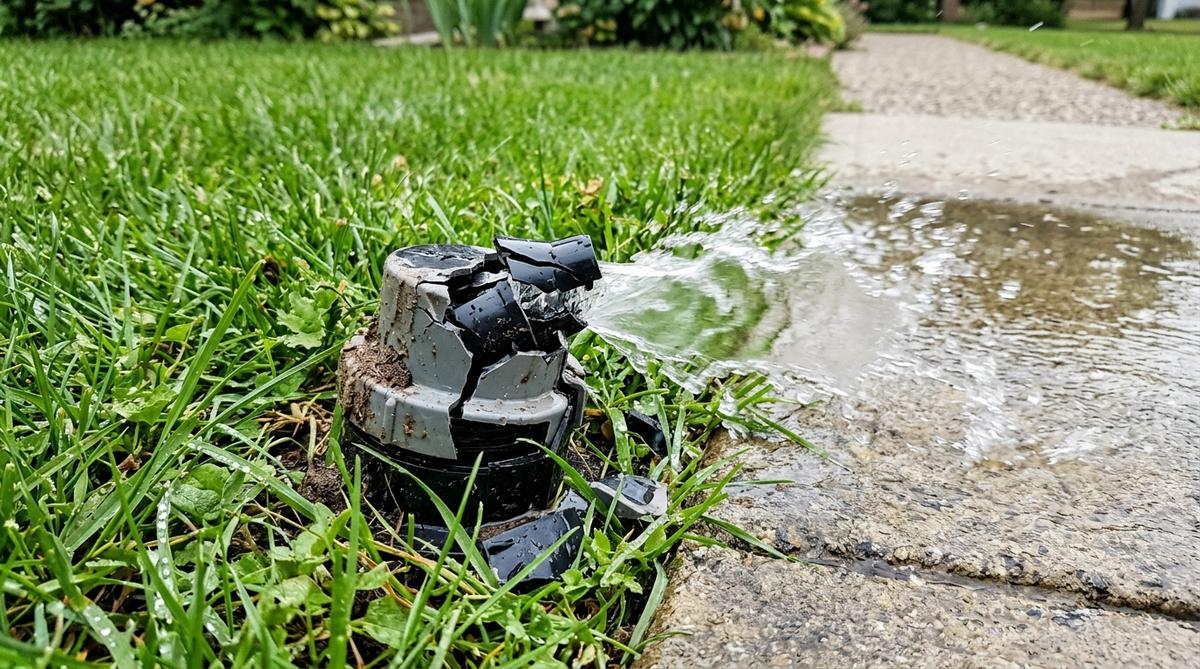
This is the part that a mower loves to catch if a head doesn’t retract fully, or if someone mows during an active watering cycle. A cracked or snapped riser is one of the most common causes of a head spraying in all the wrong directions.
The Cap
The cap sits on top of the riser and is the part you see at ground level when the system is off. It threads onto the riser and houses the nozzle below it. The cap takes direct hits from mower blades and trimmer lines.
This is the most frequently replaced part on a healthy system. Caps crack from impact, and the fix is cheap — parts run $3 to $30 at most hardware stores, and the swap takes about five minutes.
The Nozzle
The nozzle screws into the top of the cap and controls the spray pattern — how far the water reaches and what arc it covers. Different nozzles give you fixed spray, rotating spray, or an adjustable arc.
Nozzles fail in two ways: clogging (sand and sediment get in) or physical wear that widens the spray pattern over time. A worn or clogged nozzle wastes water fast. Per Resource Central, a single leaking or broken head can waste 9 to 16 gallons of water per minute.
The Filter Screen
Tucked inside the riser, just below where the nozzle sits, is a small plastic mesh screen. Its job is to catch debris before it reaches the nozzle.
This little screen causes a surprising number of “dead zone” service calls. When it clogs with sand or grass clippings, the head trickles or stops entirely. Cleaning or replacing it takes about two minutes and costs almost nothing.
The Wiper Seal
The wiper seal is a rubber ring around the riser where it meets the top of the body. It keeps soil and sand out of the mechanism and controls the water pressure seal as the riser extends.
When the wiper seal wears out, you’ll see water weeping around the base of the head during a cycle — not from the nozzle, but from the sides of the cap. Florida’s sandy soil is hard on these seals. Replacing one is part of a solid annual tune-up.
The Spring
Inside the body, below the riser, is a spring that does exactly one thing: pull the riser back down when the zone turns off. If the spring loses tension or binds up with debris, you get a head that stays up while you’re mowing.
Sticky heads are often a spring problem, or a wiper seal issue when debris has accumulated around it. Learning to lubricate your pop-up sprinkler heads once a season prevents a lot of this.
Which Parts Fail First
Not all seven parts wear at the same rate. Here’s what you’re most likely dealing with when something goes wrong.
| Part | Main failure cause | DIY-swap? | Estimated parts cost |
|---|---|---|---|
| Cap | Mower or trimmer impact | Yes, 5 minutes | $3 to $30 |
| Nozzle | Clogging or wear | Yes, 2 minutes | $3 to $30 |
| Filter screen | Sand and sediment | Yes, 2 minutes | $3 to $30 |
| Wiper seal | Age, sandy soil abrasion | Yes, 10 minutes | $3 to $30 |
| Spring | Debris or corrosion | Sometimes | $3 to $30 |
| Riser | Mower snap or freeze | Sometimes | $3 to $30 |
| Body | Root or pipe shift | No (digging required) | $59 to $150 with a pro |
A $59 service call to replace a head that only needed a $5 nozzle swap is one of the most common “irrigation repairs” out there. Five minutes with the right information and you’re done.
The parts that matter most for Sun Belt homeowners: cap, riser, and wiper seal. The cap and riser take direct mower abuse. The wiper seal degrades faster in sandy Florida soil than in loamy northern climates.
Here’s how the math compares over time:
| Approach | Upfront cost | Year 1 | 5-year trend |
|---|---|---|---|
| Replace cap yourself (reactive) | $3 to $30 per incident | Manageable | Adds up each mow season |
| Call a pro each time | $59 to $150 per call | High | Significant with repeat visits |
| Sprinkler-Guard per head (proactive) | $64.99 (10-pack) | One-time | Same one-time cost |
How to Replace a Clogged Nozzle or Dirty Filter Screen
Total time needed: about 6 minutes.
- Step 1: Turn off the irrigation zone
Run the zone briefly to confirm which head is the problem, then shut it off at your controller. You want to see the head retract fully before you touch it.
- Step 2: Unscrew the cap counter-clockwise
The cap threads off the top of the riser. Use your hand or a flat-blade screwdriver in the slot if it's tight. Hold the riser gently as you unscrew — it will want to retract back into the body.
- Step 3: Lift out the nozzle and filter screen
The nozzle lifts or unscrews from inside the cap (depends on the brand). Below it sits the small filter screen. Pull both out, rinse them under water, and inspect for sand or visible wear. If the screen is torn or the nozzle spray pattern is visibly off, swap them for a matching replacement from your hardware store. Thread everything back together, run the zone, and check the spray pattern. Most of the time, that's the whole repair.
The Two Parts a Mower Targets
The cap and riser are the only parts of the head that live above ground during a watering cycle. Everything else is underground. That means the mower threat concentrates at the top.
When a blade clips a cap, one of three things happens:
- The cap shatters completely (water blasts in all directions — easy to spot)
- The cap cracks but holds (head leaks at the seam — harder to catch quickly)
- The riser bends or snaps (head won’t retract cleanly)
All three are above-ground repairs if you catch them before the impact transfers down to the body. The body is where things get expensive.
This is the whole reason the Sprinkler-Guard by GRASSHOLE sits flush around the riser at ground level. The guard’s Flexible Advance ABS with UV Deterrent flexes on impact instead of transferring force straight into the plastic cap below it. That lateral hit from a mower wheel or trimmer line gets absorbed by the guard rather than the head.
For more on how spray heads, rotors, and impact heads differ in their failure patterns, see the guide to types of sprinkler heads.
DIY vs. Pro: Where to Draw the Line
The above-ground parts (cap, nozzle, filter screen, wiper seal) are almost always DIY territory. A trip to the hardware store and 10 minutes and you’re done.
The body and underground pipe connection are different. If water is pushing up around the base of the body at ground level (not the cap — the very base), or the whole head is leaning at an angle, that’s a pipe or body problem. At that point you either dig it yourself if you’re comfortable with it, or you call someone.
Walking each zone during a summer sprinkler check tells you a lot before something fails completely. A head that’s running slow or weeping at the base is a warning, not yet a disaster.
Per HomeGuide, quality sprinkler heads last 10 to 15 years under normal conditions. Most of the “replaced” heads that get service calls are perfectly good bodies with a $5 cap that got clipped by a mower once too often.
Frequently Asked Questions
A pop-up sprinkler head has seven parts: body, riser, cap, nozzle, filter screen, wiper seal, and spring. The body and riser are structural. The nozzle and filter screen control water delivery. The wiper seal and spring handle retraction. The cap is the only part visible from above when the system is off.
The cap breaks most often because it sits closest to ground level and takes direct hits from mower wheels and trimmer lines. Nozzle clogs are the second most common issue, especially in sandy soil areas or where hard water leaves mineral buildup.
Yes — the cap is designed to be swapped without replacing the full head. It unscrews counter-clockwise from the riser. Take the old cap to a hardware store to match the brand and model. The repair takes about five minutes and parts cost $3 to $30, per LawnStarter.
Water shooting sideways usually means the cap is cracked or the nozzle has shifted out of alignment. If the whole top of the head is missing, a mower blade likely clipped it. Unscrew what remains, check the riser for damage, and replace the cap and nozzle as a set. If the riser is also snapped, you may need to replace the full riser.
The filter screen catches sand and debris before it reaches the nozzle. When it clogs, the head runs at low pressure or stops working entirely. Pull the nozzle out of the cap, lift the screen, and rinse it under water. Two minutes, no tools.
A physical barrier around the head is the most reliable fix. A Sprinkler-Guard sits flush at ground level around each head and absorbs lateral force from mower wheels and trimmer lines before it reaches the cap. It presses into the soil in about 30 seconds, no tools needed. Mowing carefully around every head works too — until one distracted pass undoes the whole plan.
The body and riser can last 10 to 15 years with normal use, per HomeGuide. Caps and nozzles wear faster — especially if they take regular impact. Wiper seals in sandy soil may need attention every few years. A broken head left running can waste up to 25,000 gallons of water per year, per the EPA WaterSense program, so catching failures early pays off.
The Bottom Line
Seven parts. Three of them — cap, nozzle, and filter screen — account for the majority of sprinkler problems homeowners actually deal with, and all three can be swapped without a shovel or a service call.
The riser and cap are also the two parts the mower targets. Understanding that helps you make a smarter decision about protection: a Sprinkler-Guard installed around each head absorbs the impact that would otherwise show up as a cracked cap or a bent riser.
Check out how to identify which type of head you have before you buy replacement parts — the wrong cap or nozzle won’t seat properly. And a quick summer inspection walking each zone will catch weeping seals and sticky risers before they turn into flooded walkways or dead zones.
Not sure? The Sprinkler-Guard ships in 10/20/30/60-packs. If one ever takes too much abuse, you swap just that one in 30 seconds — no full system to replace.
Shop Sprinkler-Guard
- Starting at $64.99 for a 10-pack
- Free shipping on orders over $100
- 500+ five-star ratings from homeowners on Amazon
- Made in the USA by a Veteran-Owned Business in Bradenton, Florida
- Patented design — featured by Kevin Harrington (from Shark Tank)
- No tools required — installs in 30 seconds per head
- One-by-one swap design — if a guard takes too much abuse, swap just that one
Last updated: October 2026. Statistics sourced from EPA WaterSense, Johns Hopkins Medicine, LawnStarter, LawnLove, HomeGuide, IBISWorld. Product specifications and pricing current as of publication date.