Rain Bird 5000 rotors are in millions of yards, but they’re vulnerable to mower damage. Here’s how to protect yours from impact, sinking, and grass overgrowth.
⏱ 8 min read · Last updated September 2026
Ken Kwiatkowski
Founder of GRASSHOLE Corporation & inventor of the Sprinkler-Guard
Veteran. Florida homeowner who got tired of replacing the same broken sprinkler heads every season. Featured by Kevin Harrington (from Shark Tank). Recipient of the JMI 30 Award. Manufactures in Bradenton, Florida.
Full disclosure: GRASSHOLE Corporation manufactures the Sprinkler-Guard discussed in this guide. Our recommendations come from years of field testing and customer feedback.
Table of Contents
The Rain Bird 5000 is one of the most popular pop-up rotors on the market, and yes, a sprinkler head guard works with it. The Sprinkler-Guard by GRASSHOLE fits around the base to absorb mower and trimmer impact, inhibit grass from covering the head, and keep the rotor level in the soil. Install takes about 30 seconds and needs no tools.
The Rain Bird 5000 has been installed in residential irrigation systems for decades. It’s reliable, widely stocked at irrigation suppliers and home improvement stores, and it does exactly what a good rotor should: wide, even coverage with a smooth arc.
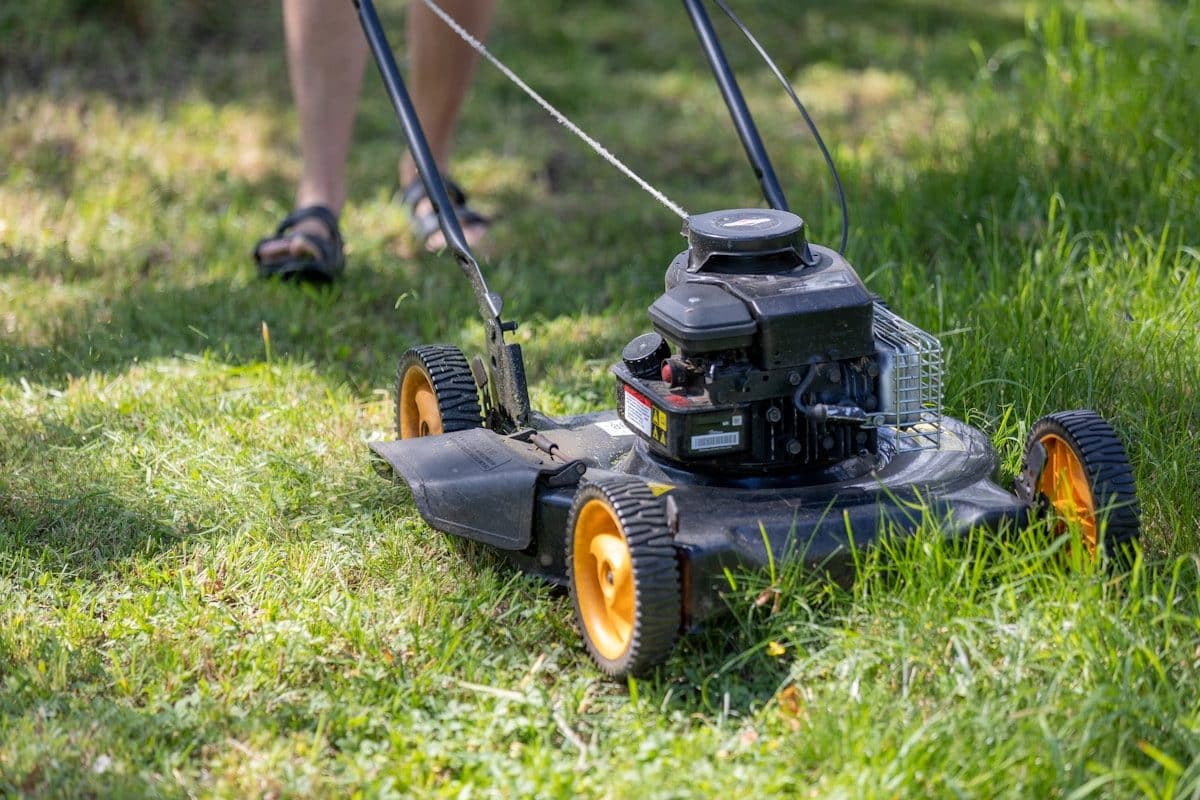
But there’s one thing it wasn’t engineered to handle: getting clipped by a lawn mower every other Saturday. According to LawnLove, professional sprinkler head replacement runs $59 to $150 per head, not counting the service call fee. If your yard has a dozen or more rotors and the mower finds two or three of them a season, that adds up to a real maintenance bill by August.
This post covers why the Rain Bird 5000 is vulnerable, what homeowners typically try, and what actually works.
Why the Rain Bird 5000 Gets Hit More Than You’d Think
It sits at grade when the system isn’t running
Pop-up rotors extend above the lawn surface to distribute water across a wide arc. When the system shuts off, they retract back to ground level. In a healthy, thick lawn, the head is nearly invisible between watering cycles. That’s great for aesthetics. It’s a problem when your mower wheel rolls right over it.
The rotor body handles pressure — to a point
The Rain Bird 5000 housing is solid. That’s part of why irrigation contractors have trusted it for years. But “solid” and “mower-proof” are different categories. Common failure modes include a cracked housing from a direct deck or blade impact, a twisted riser from a wheel rolling over the head, and a bent nozzle that throws the arc sideways. Any of those means a service call.
Grass overtakes the nozzle ring between mowings
Rain Bird 5000 rotors sit at grade. So does warm-season turf. In Florida and across the Southeast, Bermuda and St. Augustine grass grow aggressively from late spring through fall. Within a few mowing cycles, the turf creeps right up to the nozzle ring. Over a few weeks, it roots in around the base. When the head tries to pop up, it’s pushing against root pressure — the arc shortens, the coverage pattern shifts, and dry spots show up in the lawn a few days later. The problem often starts invisibly.
See more on how this plays out over time: how grass grows over sprinkler heads and disrupts irrigation.
Three Things Homeowners Try (and How They Stack Up)
Concrete donuts
A concrete ring around the head is the oldest solution in the book. The idea is that the mower wheel rides over the concrete rather than the head itself. In theory, that works. In practice, concrete donuts crack, especially in sandy Florida soil where the ground shifts seasonally. They also sink over time as soil settles, until the ring sits below the head it was supposed to protect.
Many of the busted sprinkler heads had concrete donuts on them, but they had sunk into the ground and the grass had completely covered them over, rendering them useless. That’s from a Florida lawn care professional who invented an alternative product after watching it happen on job after job — via SprinklerBuddy.
You can read a full breakdown of how these compare in concrete donuts vs. the Sprinkler-Guard.
Swing joints
A swing joint is a flexible riser that connects the head to the lateral pipe underground. When a mower or foot strikes the head, the swing joint absorbs the force and the head flexes instead of cracking. They work well for impact resistance. The downsides: swing joints don’t stop grass from overtaking the head, and installing them means digging up the head and replumbing the riser connection. That’s typically a contractor job, not a homeowner one.
Sprinkler head guards
The newest option — and the one that addresses mower impact, grass overgrowth, and alignment in one install. A sprinkler head guard is a ring of flexible plastic that goes into the soil around the base of the head. It creates a buffer between the turf and the head, absorbs mower wheel and trimmer impacts without cracking or shattering, and keeps grass from rooting against the nozzle ring.
| Protection Method | Handles Mower Impact | Stops Grass Overgrowth | Survives Sandy Soil | Homeowner Install |
|---|---|---|---|---|
| Concrete donut | Partial | No | Often cracks or sinks | Yes |
| Swing joint | Yes | No | Yes | Usually no |
| Sprinkler head guard | Yes (flexes) | Yes | Yes | Yes — 30 seconds |
| Marking flags | No | No | N/A | Yes |
How to Install a Sprinkler Head Guard on a Rain Bird 5000 (Step-by-Step)
Total time needed: about 6 minutes.
- Step 1: Run the system and locate the head
Turn on the zone with your Rain Bird 5000 heads so they're fully extended. Mark each one with a small flag or rock if needed. This is the easiest way to find heads that have sunk slightly below grade.
- Step 2: Clear grass from around the base
With the system off and the head retracted, pull back any turf that has grown over the flange at the base of the head. You want to see where the head meets the soil clearly. A flat-head screwdriver or your hand works fine for this.
- Step 3: Press the guard into place
Set the Sprinkler-Guard by GRASSHOLE over the top of the head and push it down into the soil until it sits flush with the turf surface. The Flexible Advance ABS with UV Deterrent material presses into the ground without needing a hammer or force. The head sits inside the open ring. Run the zone again and confirm the rotor extends, rotates through its full arc, and retracts normally. You're done. See our [full guide on how to protect sprinkler heads from lawn mowers](/how-to-protect-sprinkler-heads-from-lawn-mowers/) for more detail on spacing and placement across a full yard.
The Rain Bird 5000 Deserves Better Than a Concrete Donut
The Rain Bird 5000 is one of the most reliable rotors on the market. The problem isn’t the head. It’s that a lawn mower wheel exerts a lot of force against a small target, and concrete rings that crack or sink leave the head just as exposed as before.
The Sprinkler-Guard by GRASSHOLE was built for exactly this situation: a Sun Belt lawn, a warm-season grass that grows fast and thick, and a mower that isn’t going to slow down for a 3-inch piece of hardware in the turf.
The guard’s ring keeps mower wheels from rolling directly over the head. The flexible ABS gives on impact instead of shattering. And because the ring sits at grade around the head (not a cap over it), the rotor pops up freely, rotates through its full arc, and retracts without interference.
| Scenario | Year 1 | Year 5 |
|---|---|---|
| 1 damaged Rain Bird 5000, professional repair | $59-$150 per head | Repeats each time a head is clipped |
| Sprinkler-Guard 20-pack for the full yard | $125 | $125 — no repeat repair visits |
According to EPA WaterSense, a single broken sprinkler head can waste up to 25,000 gallons of water per year. A head that never gets damaged doesn’t have that problem.
Most homeowners with a full yard of Rain Bird 5000 rotors need a 20-pack to cover all the heads, with a few spares. At $6.25 per head in a 20-pack, that’s less than one professional service call.
Shop the 20-pack at Sprinkler-Guard.com
For larger rotor bodies, the 5-inch Sprinkler-Guard is available in 10-pack through 40-pack at Sprinkler-Guard.com.
Frequently Asked Questions
**Yes.** The 3-inch Sprinkler-Guard has a 3.5-inch inner opening, which fits standard Rain Bird 5000 pop-up rotor bodies. If you have a larger-body rotor, measure the head at its widest point. Anything over 3 inches wide fits the 5-inch Sprinkler-Guard instead.
**No.** The guard sits around the base of the head at soil level. The rotor turret sits inside the open center and pops up freely when the zone runs. The arc pattern and rotation speed are unaffected. Run your system after installing to confirm the head extends and rotates normally.
**Soil settlement is the main cause.** Over time, soil compacts around the head — especially in sandy soils common in the Southeast. Mower wheel pressure accelerates this. A sprinkler head guard creates a stable ring around the base that helps resist the downward force. Read more in [why sprinkler heads keep sinking](/sprinkler-heads-keep-sinking/).
**Lawn mowers.** According to [Texas Rainmakers](https://texasrainmakers.com/what-causes-sprinkler-heads-to-malfunction-and-how-do-i-repair-them/), lawn mowers are the number one cause of cracked and broken sprinkler heads. A mower wheel rolling over a Rain Bird 5000 can twist the riser, crack the housing, or knock the nozzle out of alignment. Our [best sprinkler head protectors guide](/best-sprinkler-head-protectors/) covers all the options side by side.
**Yes.** The standard 3-inch guard fits spray heads and rotors up to 3 inches wide. The 5-inch Sprinkler-Guard is available at Sprinkler-Guard.com for larger rotors and pop-up heads, in 10-pack through 40-pack sizes.
**No.** The guard stays in the ground year-round. It doesn't block access to the head for winterization blowouts. You run the blowout the same way you always have, and the guard just stays in place.
**Count your rotor heads.** Most residential yards have a dozen or more rotors across multiple zones. The 20-pack covers most yards and gives you a few spares for future heads. The 30-pack and 60-pack offer better per-head pricing and cover larger properties.
The Bottom Line
The Rain Bird 5000 is a solid rotor. It’s built for consistent performance, and in the right conditions it lasts a long time. The problem isn’t the head. The problem is that your mower passes over it every week or two, and a concrete donut that sinks below grade doesn’t solve anything.
A Sprinkler-Guard around each rotor takes about 30 seconds per head to install. After that, the mower wheel hits the flexible ring instead of the head, the grass can’t root against the nozzle, and the rotor stays level. Most homeowners who install them stop making irrigation service calls for broken heads.
Protect your Rain Bird 5000 heads at Sprinkler-Guard.com
Not sure? The Sprinkler-Guard ships in 10/20/30/60-packs. If one ever takes too much abuse, you swap just that one in 30 seconds — no full system to replace.
Shop Sprinkler-Guard
- Starting at $64.99 for a 10-pack
- Free shipping on orders over $100
- 500+ five-star ratings from homeowners on Amazon
- Made in the USA by a Veteran-Owned Business in Bradenton, Florida
- Patented design — featured by Kevin Harrington (from Shark Tank)
- No tools required — installs in 30 seconds per head
- One-by-one swap design — if a guard takes too much abuse, swap just that one
Last updated: September 2026. Statistics sourced from EPA WaterSense, Johns Hopkins Medicine, LawnStarter, LawnLove, HomeGuide, IBISWorld. Product specifications and pricing current as of publication date.