



Learn why sprinkler heads sitting too low cause uneven watering and how stabilizing sprinkler heads supports consistent irrigation and long-term lawn health.
There’s a subtle lawn problem that often goes unnoticed until the damage spreads.
At first glance, everything appears normal. The grass is trimmed. The watering schedule runs on time. But then you begin to notice irregular color. A slightly thin strip near a walkway. A faintly soggy patch beside it.
You check the sprinkler head and realize something small — it’s sitting lower than it used to.
If you’ve ever questioned why sprinkler heads sitting too low cause uneven watering and turf decline, the answer is less about volume and more about position.
As Angus McGrass might say with a thoughtful look across the yard, “A wee inch too low can change the whole tale of the turf.”
Let’s explore why sprinkler heads sitting too low cause uneven watering and turf decline — and what steady, preventative care truly looks like.
Sprinkler heads are engineered to sit at grade level. That placement ensures water leaves the nozzle unobstructed and distributes in a full, balanced arc.
When sprinkler heads begin sitting too low, spray patterns change immediately.
Grass blades block part of the stream. Water hits nearby turf at a lower angle. Coverage shortens on one side. Some areas receive too much water; others receive too little.
This imbalance explains why sprinkler heads sitting too low cause uneven watering and turf decline.
The issue isn’t dramatic. It’s gradual. And gradual changes often go unnoticed until turf stress becomes visible.
Sprinkler heads don’t sink without cause.
Soil naturally shifts due to:
Over time, soil compacts unevenly around the sprinkler housing. The head gradually settles slightly below grade.
When sprinkler heads sitting too low cause uneven watering and turf decline, the root issue is soil instability.
Even a half-inch drop can reduce spray distance significantly. That reduction disrupts irrigation balance.
Understanding this connection helps homeowners avoid reacting by simply increasing watering time.
A common reaction to dry patches is extending watering duration.
But when sprinkler heads sitting too low cause uneven watering and turf decline, the problem is not insufficient water volume — it is improper distribution.
Longer watering cycles may:
Healthy turf depends on consistent coverage, not excessive duration.
The solution lies in restoring proper head elevation and preventing future settling.
When sprinkler heads sit too low, irrigation efficiency drops.
Blocked spray arcs mean longer watering times. Longer watering times increase water use. Compacted soil reduces infiltration, leading to runoff.
Water conservation begins with proper alignment.
When sprinkler heads sitting too low cause uneven watering and turf decline, the environmental impact extends beyond appearance. It affects resource use.
Balanced irrigation is both a turf health issue and a sustainability issue.
Imagine a sprinkler head near a driveway edge.
Over months of mower passes and foot traffic, the soil compacts slightly. The sprinkler head settles just below grade.
Its spray arc shortens by a small margin. A narrow strip along the driveway becomes thin.
The homeowner extends watering time. The nearby grass grows lush, but the driveway strip remains inconsistent.
After stabilizing the soil evenly around the sprinkler head and restoring proper elevation, the spray arc reaches its intended distance. The strip gradually fills in without additional watering time.
The improvement came from correcting elevation — not increasing output.
Understanding why sprinkler heads sitting too low cause uneven watering and turf decline shifts focus toward structural stability.
This is where Sprinkler-Guard by Grasshole integrates naturally into a thoughtful irrigation plan.
Sprinkler-Guard by Grasshole is designed as a preventative solution for sprinkler head damage and alignment problems. Made from advanced flexible ABS plastic, it adapts to soil movement rather than cracking under pressure.
When sprinkler heads begin sitting too low due to soil settling, adaptive protection helps stabilize the surrounding soil evenly. It helps inhibit grass growth and prevents sinking that leads to elevation loss.
It is not a quick fix. It is part of a long-term irrigation strategy that prioritizes consistent head alignment and proper grade positioning.
By maintaining elevation, sprinkler heads deliver intended spray arcs. Intended spray arcs create uniform soil moisture. Uniform soil moisture supports strong root development and resilient turf.
Built super tough and made in the USA, it supports preventative maintenance rather than seasonal correction.
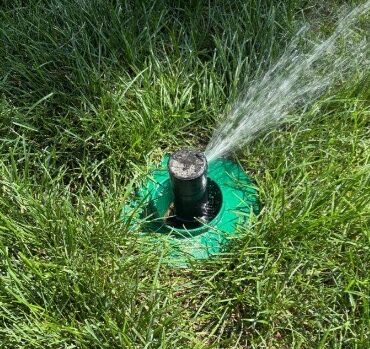
Soil compaction from foot traffic, mower pressure, and repeated watering cycles can gradually lower sprinkler heads below grade.
When sprinkler heads sit below grade, grass obstructs spray and reduces coverage distance. This leads to inconsistent soil moisture and stressed turf.
Temporary adjustments may help, but without stabilizing surrounding soil, the head may sink again.
Yes. Adaptive protection like Sprinkler-Guard by Grasshole helps distribute soil pressure evenly and reduce gradual settling around sprinkler heads.
Look for reduced spray distance, blocked arcs, or recurring dry strips near lawn edges.
If repeated adjustments are required or turf decline appears near certain heads, elevation stabilization should be considered.
Recognizing why sprinkler heads sitting too low cause uneven watering and turf decline encourages a preventative mindset.
Healthy lawns depend on consistent irrigation. Consistent irrigation depends on properly positioned sprinkler heads. Proper positioning depends on stable, adaptable soil support.
As Angus McGrass might say with quiet certainty, “Keep the head steady and the water true — the grass will do the rest.”
Stability beneath the surface sustains beauty above it.