How often to water your lawn in summer? Get the right schedule for Sun Belt grasses, signs of over- and underwatering, and tips to keep your system working.
⏱ 8 min read · Last updated July 2026
Ken Kwiatkowski
Founder of GRASSHOLE Corporation & inventor of the Sprinkler-Guard
Veteran. Florida homeowner who got tired of replacing the same broken sprinkler heads every season. Featured by Kevin Harrington (from Shark Tank). Recipient of the JMI 30 Award. Manufactures in Bradenton, Florida.
Full disclosure: GRASSHOLE Corporation manufactures the Sprinkler-Guard discussed in this guide. Our recommendations come from years of field testing and customer feedback.
Table of Contents
In most Sun Belt yards, water 2-3 times per week in summer, running each zone for 20-45 minutes depending on your sprinkler type. The goal is about 1 inch of water per week, applied in two or three deep sessions rather than a little bit every day. Exact timing depends on your grass type, soil, and how hot it has been.
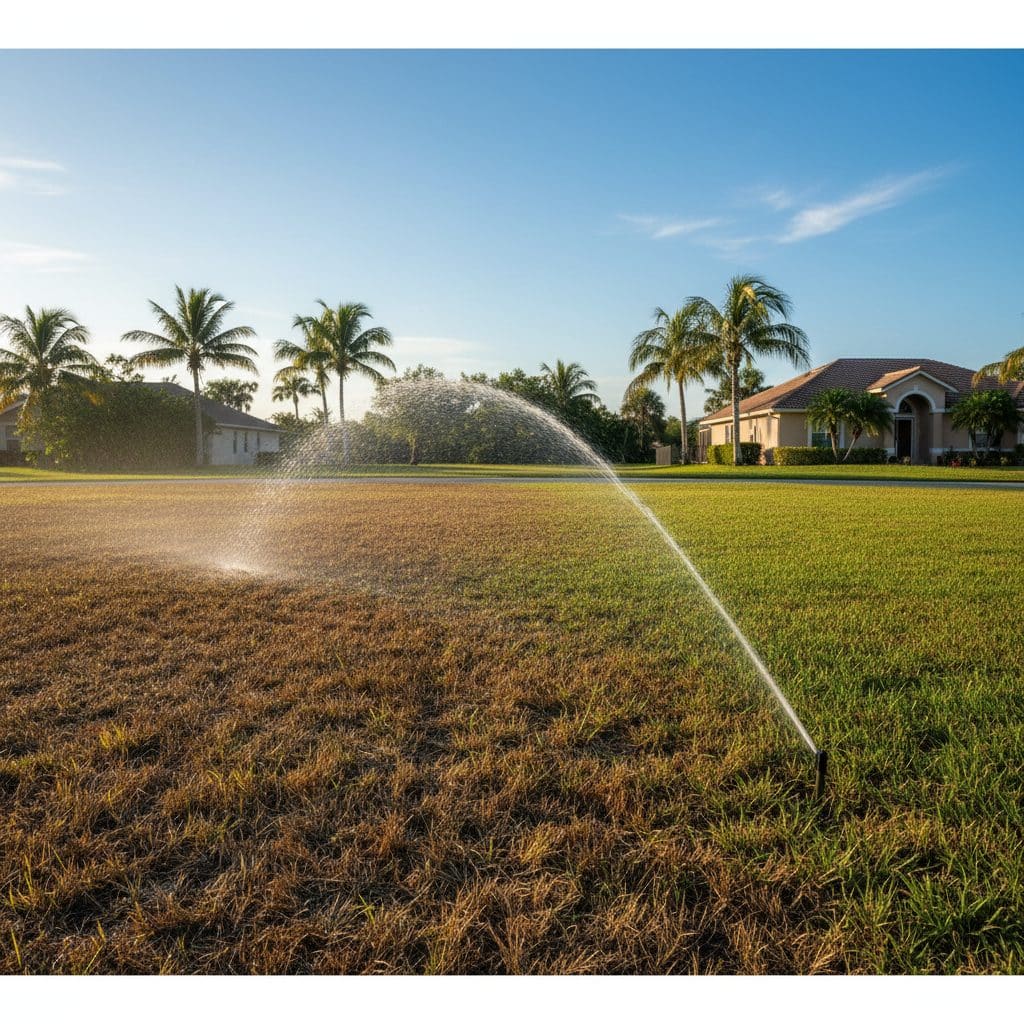
Most people either overwater in summer out of anxiety or underwater because they set the schedule in spring and forgot about it. Either way, the lawn tells you pretty fast — usually through brown patches in spots that should be getting plenty of water.
Outdoor watering already accounts for nearly 30 percent of how much water a typical home uses, per EPA WaterSense. And up to half of that is wasted from poor scheduling, too much wind, or runoff. Getting the rhythm right is not just good for your grass. It saves real money on your water bill.
Why Summer Changes the Rules
Your grass is living on a water budget. In spring, cooler temperatures and regular rain do most of the work. Come July, the math flips. Heat pulls moisture out of the soil faster, sun evaporates what lands on the surface before roots can absorb it, and your grass needs to work harder just to stay green.
Warm-season grasses like Bermuda and St. Augustine are built for this. They actually hit their peak growth in summer. But peak growth means peak water demand. Cool-season grasses like tall fescue or bluegrass can go semi-dormant in the heat and need gentler handling to avoid burning them out.
The common mistake is treating summer watering like spring watering, just with more of it. The real fix is changing the schedule, not just cranking up the runtime.
Step-by-Step: Build Your Summer Watering Schedule
Total time needed: about 10 minutes.
- Step 1: Know Your Grass Type
Your grass type sets the baseline. According to [LawnLove](https://lawnlove.com/blog/sprinkler-repair-cost/), warm-season grasses need roughly 1 to 1.5 inches of water per week in summer. Cool-season grasses under heat stress often need similar amounts but require more careful timing to avoid disease. Sandy soils drain faster and need more frequent watering. Clay soils hold moisture longer and can go further between sessions.
- Step 2: Run the Tuna Can Test
Before you trust your controller settings, check how much water your sprinkler actually puts down. Set a few empty tuna cans in the spray pattern for one zone. Run that zone for 15 minutes and measure what collected. Standard spray heads typically deliver about a quarter inch per 15 minutes. Rotors are slower, around a quarter inch per 30 minutes. If your cans show more or less, adjust your runtime accordingly before locking in the schedule. Do this zone by zone.
- Step 3: Water in the Early Morning
The best window is between 4 AM and 10 AM. Temperatures are cooler, wind is calmer, and water soaks in rather than evaporating off the surface. Leaves dry before afternoon heat, which cuts down on fungal disease. We go deeper on the reasoning in our guide to [the best time to water your lawn](https://grassholesystem.com/best-time-water-lawn/). Watering at midday in July means a big share of what you put out evaporates before it reaches the roots. Watering at night leaves grass wet for hours, which is an invitation for brown patch and other summer fungal problems.
- Step 4: Water Deep, Not Every Day
Daily light watering is the single most common summer mistake. A quarter inch every day trains grass roots to stay shallow because moisture is always available near the surface. When a dry stretch hits, those shallow roots have nowhere to go. The better approach: water less often but run longer. Let the top inch of soil dry out between sessions. Deeper roots stay in cooler, more stable soil, which means a more forgiving schedule during heat waves and better recovery if you miss a day.
- Step 5: Adjust for Rain
A solid inch of rain means you skip your next watering day, maybe two. Rain sensors and smart controllers can automate this, but you can do it manually just by watching the forecast and checking the soil before running a cycle. According to [GreenSpaces Coalition](https://greenspacescoalition.org/irrigation-waste-report/), simple schedule adjustments alone can cut outdoor water use by 20 to 30 percent without changing anything about your landscaping. Skipping unnecessary watering days when rain does the job is the easiest version of that.
Signs You Are Getting It Wrong
You do not need a moisture meter to know when the schedule is off. Your lawn will show you.
Signs of too much water:
- Soil stays soggy between watering days and never fully dries
- Mushrooms pop up in the grass
- Grass looks pale or yellowy despite regular watering
- Water runs off onto the sidewalk or driveway before the cycle ends
- Soft spots in the turf that feel spongy when you walk across
Signs of too little water:
- Grass blades start curling or rolling inward on themselves
- A blue-gray tinge appears in normally green areas
- Footprints stay visible in the grass for more than 30 seconds after you walk across
- Brown patches spread near concrete or pavers where heat reflects off the surface
- Soil pulls away from the edges of the lawn
If your footprints stay visible for more than 30 seconds after you walk across the yard, your lawn is thirsty. That is the simplest field check I know. Do it before adjusting your controller.
Both problems are easier to fix early. A soggy lawn two weeks into the pattern is fighting disease as well as schedule issues. A dry lawn that has gone dormant takes longer to bounce back.
Keep Your Sprinkler System Working This Summer
Your watering schedule only matters if the system that delivers the water is working right. Summer is when pop-up sprinkler heads take the most abuse. You are mowing every five to seven days during peak growth, and each pass is another chance for the mower or trimmer to clip a head.
A broken or misaligned sprinkler head does not just waste water. It throws off your whole zone’s distribution pattern, leaving one area bone-dry and another oversaturated. Per Resource Central, a single broken head can waste 9 to 16 gallons per minute. Run a zone for 30 minutes with one bad head and you have lost 270 to 480 gallons on nothing useful.
Sprinkler heads that keep sinking are another summer issue, especially in sandy Sun Belt soils where frequent watering softens the ground around the heads. A head that drops below grade misses coverage entirely, and you end up chasing brown patches that are actually just gaps in your spray pattern.
| One Summer | Three Summers | |
|---|---|---|
| One broken head, unprotected | $59-$150 service call | $177-$450 |
| Sprinkler-Guard 10-pack (all heads) | $64.99 | $64.99 (one install) |
I put Sprinkler-Guards around every head in my yard two seasons ago and stopped dealing with this problem entirely. The Flexible Advance ABS with UV Deterrent absorbs the mower hit so the head does not. Thirty-second install, no tools. You can pick up a 10-pack at Sprinkler-Guard.com and take care of it before your next mow.
Frequently Asked Questions
**Most warm-season lawns need water 2-3 times per week** in summer, targeting about 1 to 1.5 inches total per week. Water on alternate days rather than daily, and let the soil dry slightly between sessions to push roots deeper. Exact frequency depends on your grass type, soil drainage, and local temperatures.
**Watering every other day (or every two to three days) beats daily watering** for most lawns. Daily light watering keeps moisture near the surface and promotes shallow roots that give out fast during heat waves. Deep, less-frequent watering builds stronger roots in cooler soil.
**Run each zone 20-45 minutes per session**, based on your head type and grass. Standard spray heads deliver water faster, so 20-30 minutes usually covers it. Rotor heads are slower and may need 30-45 minutes. Use the tuna can test to confirm actual output before locking in your controller settings.
**Early morning between 4 AM and 10 AM** is the sweet spot. Evaporation is lowest, wind is calmer, and leaves dry out before afternoon heat, which keeps fungal disease down. We cover the full breakdown in our [best time to water your lawn guide](https://grassholesystem.com/best-time-water-lawn/).
**Yes, nighttime watering can cause real problems.** Grass that stays wet for hours overnight is vulnerable to brown patch and other fungal diseases that spread fast in humid summer conditions. If evening is your only option, water early enough that leaves get some drying time before dark.
**Add time per session rather than adding extra days.** During extreme heat, evaporation accelerates and soil dries faster than usual. Adding 5-10 minutes to existing cycles is more effective than running a full extra day. Watch for curling blades and footprint visibility as your daily stress check.
**Walk the yard while a zone is running and watch each head.** Look for heads that are not popping up fully, spraying sideways or in the wrong direction, or sitting too low to clear the grass. Consistent brown patches in one section of a zone often signal a coverage gap or a damaged head. Our guide on [brown grass around sprinkler heads](https://grassholesystem.com/brown-grass-around-sprinkler-heads/) covers the most common patterns.
**You can run the system, but you are wasting water and missing coverage.** A broken head skews the whole zone's distribution, leaving some spots short and others flooded. Fix or replace it before the schedule makes the dry patches worse. If the head keeps breaking from mower contact, a Sprinkler-Guard stops that cycle.
Your summer watering schedule comes down to one principle: water deeply on a consistent rhythm and let the soil condition drive the timing, not the calendar. Two or three solid sessions per week, early in the morning, with enough runtime to push moisture down into the root zone, will carry most Sun Belt lawns through August without drama.
The system that delivers that water needs to hold up too. Walk a zone cycle once a month to catch misaligned or damaged heads early, adjust your schedule when rain gives you a break, and protect the heads before mowing season peaks. That is the whole playbook.
Not sure? The Sprinkler-Guard ships in 10/20/30/60-packs. If one ever takes too much abuse, you swap just that one in 30 seconds — no full system to replace.
Shop Sprinkler-Guard
- Starting at $64.99 for a 10-pack
- Free shipping on orders over $100
- 500+ five-star ratings from homeowners on Amazon
- Made in the USA by a Veteran-Owned Business in Bradenton, Florida
- Patented design — featured by Kevin Harrington (from Shark Tank)
- No tools required — installs in 30 seconds per head
- One-by-one swap design — if a guard takes too much abuse, swap just that one
Last updated: July 2026. Statistics sourced from EPA WaterSense, Johns Hopkins Medicine, LawnStarter, LawnLove, HomeGuide, IBISWorld. Product specifications and pricing current as of publication date.